
May is Mental Health Awareness Month and like this spring which has had several fluctuations in temperature and weather, many people also experience highs and lows, not just now, but year-round. Some may have little difficulty navigating these changes, while others find it much more challenging. There can be many reasons for this, including an inadequate support system, financial constraints, work commitments, life or family stressors, inability to find the right provider, and more.
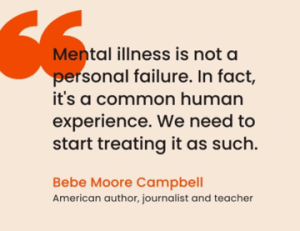
There is also social stigma that surrounds mental health, often discouraging people from seeking treatment. Despite more visibility because of social media and technology advances, people seeking answers for their personal challenges or who have received a mental health diagnosis may experience shame, fear, embarrassment, anger, or denial. Being in therapy and/or taking medications may make someone feel they are weak or that others will see them as “crazy.” Sadly, this concern is not entirely unjustified. In a 2025 Harris/APA poll, 35% of respondents stated they would view someone they knew differently if that person had a mental health diagnosis.1
Fortunately, views on mental health treatment are slowly changing. Information on diagnoses, medications, and therapy options are more easily accessible. Buzz words like “self-care” and “mindfulness” trend highly on social media apps. Influencers, celebrities, and popular mental health professionals are openly discussing the positive outcomes of engaging in treatment including stabilized mood, healthier relationships, higher self-confidence, and a more optimistic outlook.

Despite this, discussing mental health is still a taboo topic for many people. Here at LifeBack we are committed to helping end the stigma. But how?
- Education to improve public understanding of mental health conditions and treatment options2
- Contact with lived experience by amplifying voices of those living with mental health conditions which can help to reduce stereotypes2
- Media representation done responsibly and factually to promote awareness2
- Supportive policies in the workplace and in clinical settings to promote inclusion, encourage discussions, and ensure access to care is available2
- Policy and cultural changes to increase access to care, establish equality in funding at all levels of government, and create stricter accountability measures2
During Mental Health Awareness Month, what actions can you take to help support someone dealing with a mental health condition? If you are the one struggling, what steps will you take to improve your mental well-being? LifeBack is ready to help! We hope that you will consider partnering with us to address your own concerns or those of someone you care about.
________________________________________________________________________________
[1] American Psychological Association. Public attitudes toward mental health in the United States. 2025 May. https://www.apa.org/pubs/reports/mental-health-attitudes
[2] Liao S. Mental health stigma: Breaking the silence and building hope. 2025 November 5. https://www.integrative-psych.org/resources/mental-health-stigma-breaking-the-silence-and-building-hope#s-strategies-to-reduce-mental-health-stigma