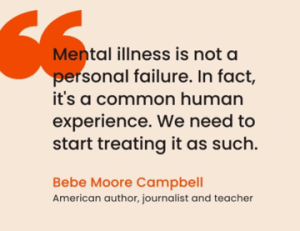
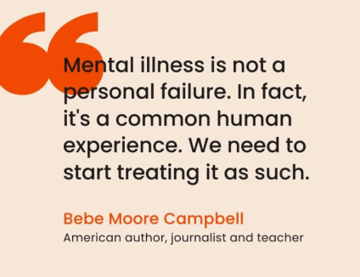
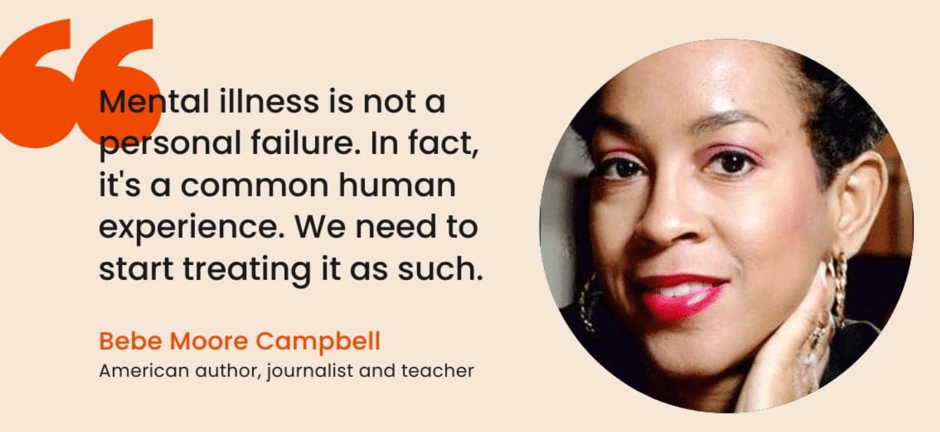
July is National Minority Mental Health Month, also known as BIPOC Mental Health Month or Bebe Moore Campbell National Minority Mental Health Awareness Month. Bebe Moore Campbell (1950-2006) was a journalist, best-selling author, educator, and an advocate who revolutionized how society views mental health in underserved communities.
Due to her groundbreaking efforts, on June 2, 2008, the United States Congress declared the month of July to be Bebe Moore Campbell National Minority Mental Health Awareness Month, continuing to create awareness and uplift communities of color facing mental health challenges.
Barriers to Care
BIPOC communities not only have higher rates of mental health illness, substance use disorder, suicide, and PTSD, but they also face a number of challenges to accessing the care they need. There is a lack of trust in medical institutions, systemic racism, microaggressions, lack of cultural sensitivity and understanding, social and cultural stigma, financial or insurance issues, language barriers, and many more.1
Ways We Can Help
Keep in mind that different generations may prefer different methods of contacts (e.g., in person versus telephone or facetime). We should also take care with the words we use, being sensitive in our approach. Avoiding terms like insane, crazy, even depressed or anxious may go a long way in making your friend or loved one more comfortable. Finding a neutral setting to talk may be helpful as well as sharing personal stories to let them know they are not alone.
At LifeBack, we recognize mental health challenges don’t discriminate, regardless of gender, race, religious beliefs, and more. We are here to help anyone seeking services and will do so with compassion, sensitivity, and respect. Give us a call today!
_________________________________________________
- Leblanc, D. (2023). Black Indigenous and People of Color (BIPOC) Mental Health Fact Sheet. rtor_bipoc_fact-sheet_2023-web.pdf